The Constraint That Breaks the Factory
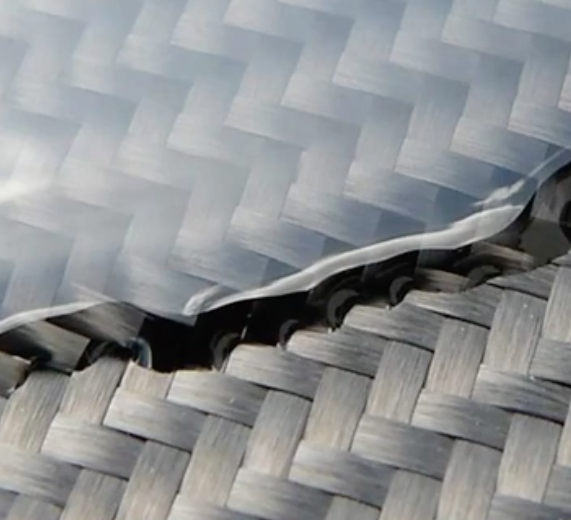
A founder’s reflection on scale, manufacturing physics, and the strange economics of building big things.
Most startups begin with a product idea: A new material. A faster tool. A cheaper component. Perseus Materials didn’t start there. The company began with a more uncomfortable question: Why are the largest things we build still constrained by factories designed for much smaller parts?
Spend time around wind turbine blades and the problem becomes obvious. A modern blade can stretch well over 100 meters, yet the process used to manufacture it still depends on molds that are even larger than the blade itself. The molds dictate the factory size. The factory dictates the capital cost. The capital cost dictates the pace of deployment. At some point the system stops scaling.
Dan Lee, the founder of Perseus Materials, looked at this and saw something strange. Composite materials are synthetic. We design the molecules. We control the chemistry. And yet somehow the manufacturing process behaves as if the material were a stubborn natural resource rather than something engineered.
That paradox became the starting point. Perseus isn’t trying to build a better composite part. It’s trying to remove the constraint that makes the factory necessary in the first place.
Start with the constraint, not the product
Most deep technology or materials companies begin with a breakthrough technology and then search for a market. Perseus worked the problem backwards. Early conversations with blade manufacturers revealed a recurring frustration. Composite parts become harder and slower to manufacture as they get thicker. The cure process moves inward from the surface, and because fiberglass is an insulator, heat propagation becomes the limiting factor. The cure process is the composites equivalent of baking a cookie - except in composites the cookie is only done when it is perfectly uniform throughout, not doughy inside and crisp outside.

Dan Lee, CEO of Perseus Materials
Accepting the 2025 JEC Startup Booster Competition Prize
The larger the structure, the slower the process. The typical composite technology response is incremental: engineering faster resin systems, creating larger molds, adding more heat control and automation. Like designing an oven around a cookie.
Dan’s instinct was different. Instead of optimizing the cure process, he asked what would happen if the curing behavior itself became the advantage.
“We started talking to manufacturers and identified constraints that exist in every composite process… and traced it to a limitation in chemistry. We already had the chemistry, we just didn’t realize what it could be used for.”
That insight led Perseus toward self-propagating curing, in which the resins play an active role in moving the heat from the outside to the inside, as opposed to standard cure which heats and insulates entirely from external sources.
Once that shift happens, the manufacturing logic changes. Parts no longer need to sit in molds waiting for heat to travel through them. Instead, the material can be formed and cured simultaneously as it moves through the machine. At that point the factory begins to look less like a giant mold shop and more like a continuous production system. The constraint moves.
Demonstrate scale before engineering perfection
Another unusual choice: Perseus did not start by optimizing part quality. They started by building large, slightly bizarre parts.
From a traditional engineering perspective this sounds backwards. But in infrastructure-scale manufacturing the real question isn’t whether you can make a perfect part. It’s whether the process can operate at the size required by the application.
Dan describes the early philosophy simply: “The goal wasn’t to make a high-quality part right now. The goal was to make an enormous part.” That distinction matters.
Large-scale manufacturing systems are governed by physics and economics long before they are governed by precision tolerances. If the system can’t produce something large quickly enough, no amount of quality optimization will make the business viable.
So Perseus focused first on demonstrating the unusual properties of the process:
continuous pulling of composite structures
simultaneous shaping and curing
geometry changes mid-process
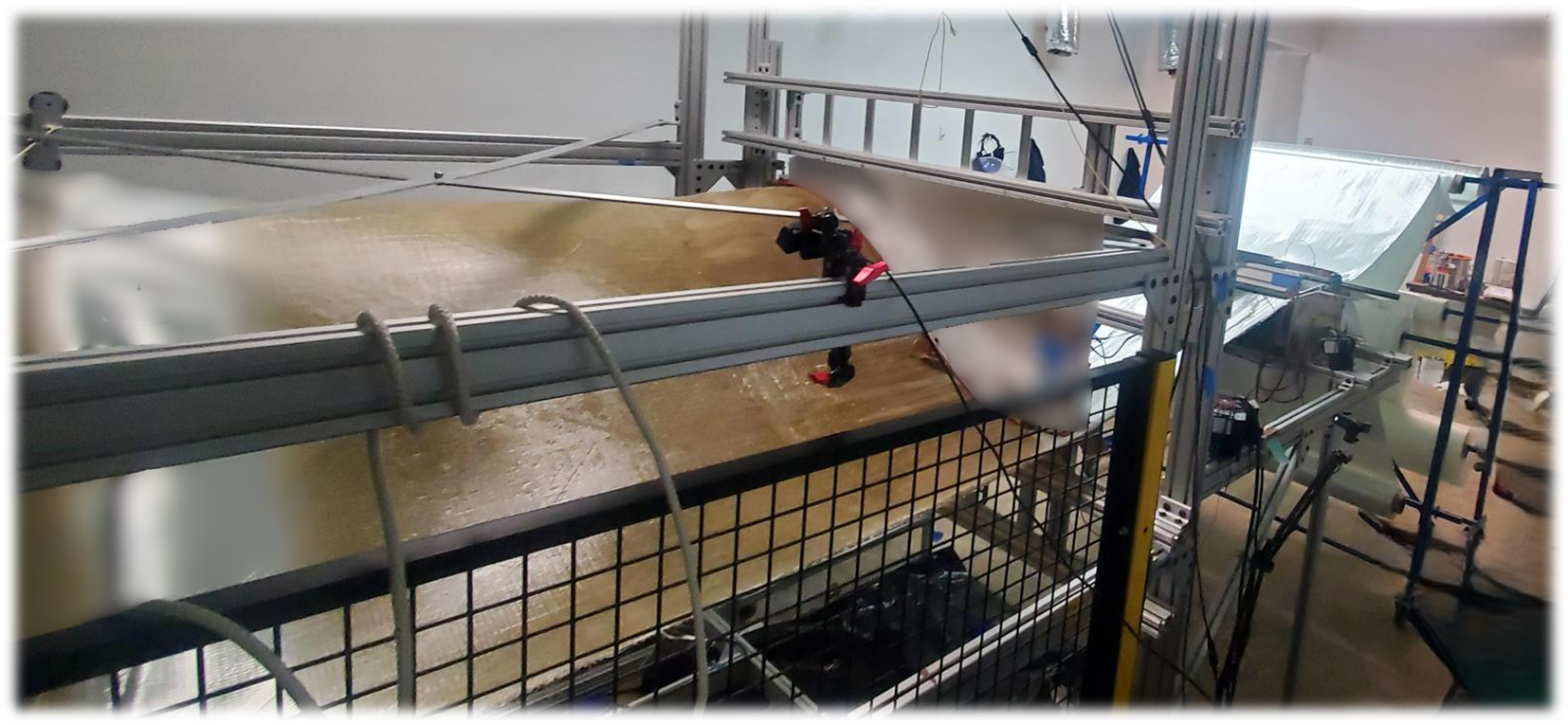
Perseus Materials manufacturing process
The parts looked strange, but they did something important: they expanded the imagination of potential partners including investors, customers and researchers. Once the possibility of large-scale continuous forming was visible, the next phase—quality engineering, machining integration, process control—made sense. It’s a classic industrial pattern. First prove the system exists, then make it reliable.
Real scale changes the mechanism of production
One of Dan’s recurring themes is a frustration with what he calls “fake scale”. Fake scale is when a company doubles output by doubling equipment. Real scale changes the underlying production mechanism.
He often uses a historical analogy. Early penicillin production relied on shallow petri dishes because the mold required oxygen at the surface. Scaling the process meant stacking thousands of trays in rooms. It worked, but only up to a point. The breakthrough came when engineers switched to deep fermentation tanks. Suddenly production increased by orders of magnitude. The lesson stuck. “Spending double the money to get double the equipment is not real scale.”
Perseus is trying to find that fermentation-tank moment for composite manufacturing. If the process truly cures volumetrically and forms continuously, then production no longer depends on mold size or cure time. It depends on throughput. The potential of a high throughput manufacturing operation opens up an entirely different architecture for building large composite structures.

Perseus Materials boat hull (2026)
Instead of transporting massive finished parts across continents, the machines themselves could operate closer to where the structures are needed. The factory becomes “portable”. Instead of demanding large volumes per order, the machines can adapt quickly between part runs. The factory becomes “adaptable”. The net result is a dramatically smaller factory serving a diverse customer base in a local area.
Looking forward
Perseus is still early. Dan and the team are working through the unglamorous realities of manufacturing: machining tolerances, process control, facility certification, and customer qualification. Those are the steps that transform an intriguing machine into an industrial system.
At the same time, the company continues exploring applications where the scale advantage matters most, including wind turbine blades, marine and aerospace structures, and large infrastructure components. These are markets where mold size, transportation logistics, and factory capital costs are already major constraints.
If the underlying manufacturing model shifts, entire project economics shift with it. And that is where things get interesting. Dan sometimes frames the entire problem in a way that sounds almost philosophical.
“We routinely build infrastructure using materials pulled from the ground—steel, aluminum, concrete. Those materials are messy, inconsistent, and energy-intensive to process. Composite materials are the opposite. They are synthetic. Designed. Tunable at the molecular level. And yet somehow they remain harder to manufacture at scale.”
That contradiction bothers him. Why should something we fully control be harder to produce than something nature made millions of years ago?
Perseus is one attempt to answer that question. It may or may not become the next dominant manufacturing system for large structures. But the instinct behind it is the right one: start with the constraint, change the physics of the process, and the factory itself begins to change shape.
That’s how new industrial eras tend to begin. Not with a product launch, but with chemistry and a strange new machine.