Open Compute Project: Standards as Market Infrastructure
In 2011, Facebook solved its infrastructure scaling crisis not through procurement reform, but through a demand strategy: the Open Compute Project (OCP). By publishing the server and data center designs developed for its Prineville facility, Facebook converted internal engineering into shared market infrastructure.
This was an act of specification authority. Facebook understood that a single-vendor ecosystem could never keep up with its desired exponential growth. By making its detailed CAD files and engineering drawings open, it invited multiple suppliers to compete to build the same thing. Competition shifted from "what should the system be?" to "who can execute this standard best?"
Facebook did not buy the supply chain. It changed the rules by publishing the brief.
The Intervention
In 2009, Facebook's infrastructure was at its limits. The company was adding hundreds of thousands of users daily. The existing data center architecture, with leased space in vendor-operated facilities and commercial servers running in standard configurations, could not scale at the speed or at the cost Facebook needed. Power consumption was unsustainable. Cooling was inefficient. Hardware costs were accelerating faster than revenue.
Facebook made a decision most technology companies do not make: to design its own data centers and servers. The company assembled an internal infrastructure engineering team and began work on a greenfield data center in Prineville, Oregon. The team questioned every assumption. Why did servers need metal chassis when the rack could provide structural support? Why run power conversion at the server level when you could do it once at the rack level? Why cool the entire building when you could direct airflow precisely? Why use proprietary components when commodity hardware could work?
The Prineville facility opened in 2011. It worked. Power usage effectiveness—the ratio of total facility power to computing power—was 1.07, meaning only seven percent of power was lost to cooling and infrastructure. Industry standard at the time was closer to 2.0. The cost per watt of computing capacity was roughly half what Facebook had been paying in leased facilities.
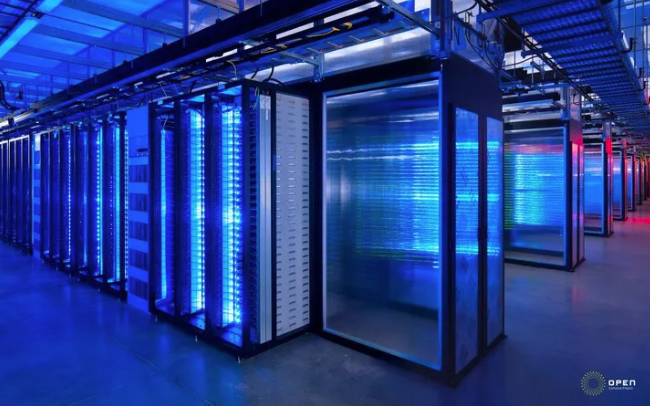
Open Compute Modules Source: Open Compute Project
Facebook had solved its own problem. Then it made a non-obvious move: It published the designs.
In April 2011, Facebook launched the Open Compute Project, releasing detailed specifications for the servers, racks, power distribution systems, and building infrastructure developed for Prineville. Not marketing materials. Not white papers. Actual engineering drawings, CAD files, parts lists, and performance data—everything a manufacturer would need to build to the same standard.
The logic was structural, not idealistic. Facebook's infrastructure needs were growing exponentially. A fragmented, proprietary ecosystem would force Facebook to renegotiate its architecture, components, and pricing for every build. But if Facebook published an open specification, multiple suppliers could compete to build the same thing. Competition would drive cost and innovation.
Facebook would never be locked into one vendor's roadmap, and, critically, other buyers with similar needs could adopt the standard, creating even more supplier investment and ecosystem velocity.
Within two years, manufacturers including Quanta, Wiwynn, and Hyve Solutions were producing OCP-compliant hardware. Component suppliers began designing for the OCP interface standards. Other hyperscalers, including Microsoft, adopted elements of the architecture or contributed their own designs to the project. What began as Facebook's internal standard became the industry's infrastructure.
By 2015, OCP had grown to include designs for storage systems, network switches, and rack-level power management. By 2020, it included specifications for AI training infrastructure, edge computing hardware, and liquid cooling systems. The governance model evolved—OCP became a foundation with working groups, contribution processes, and compliance testing. But the core mechanism remained: informed buyers publishing detailed specifications, making it profitable for suppliers to build to a shared standard.
As of 2025, OCP specifications underpin a substantial portion of the more than 1,297 operational data centers worldwide—nearly triple the number from early 2018. The model proved that an informed and trusted ecosystem could scale faster than any single buyer could.
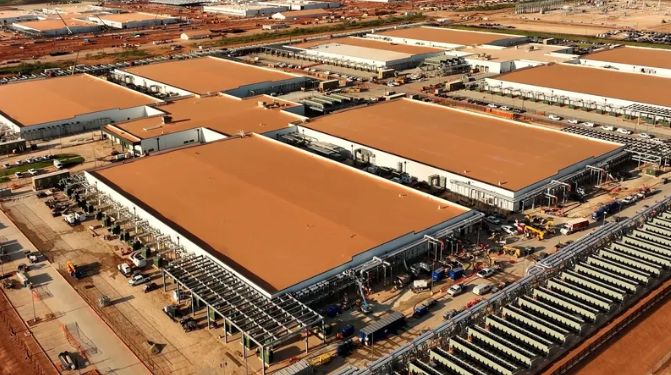
Aerial photograph of the Stargate AI campus under construction, Abilene, Texas, 2025. Courtesy of OpenAI
The Model: Open Specification Authority
An open specification authority is the ability of a buyer—or a buyer coalition—to define the critical interfaces, performance requirements, and operating envelope of a repeated asset class so clearly that many suppliers can build to the same system without renegotiating it every time. Such a specification authority requires the buyer to decide four things:
Common Interfaces: Defining non-negotiables like rack dimensions, power interfaces, cooling architecture, and network topology to enable interoperability.
Permissible Variation: Allowing innovation in finishes, non-critical components, and site-specific adjustments, but only in zones that do not break the system.
Validation: Establishing governance to certify conformance and prevent the standard from becoming vague or dated.
Committed Volume: Aggregating enough demand to make supplier investment in specialized tooling rational.
The construction equivalent is an open architecture for repeated building systems, such as hospital rooms, housing modules, or substation skids. By publishing a reference design that is buildable and inspectable, buyers move from purchasing isolated projects to shaping a market. Suppliers no longer compete by persuading buyers to adopt a bespoke architecture. They compete by delivering better components, faster production, lower cost, better service, and improved performance inside the architecture. That is more useful than negotiating the architecture every time.
"Repeated buyers should stop treating specifications as project documents and start treating them as market infrastructure."
The Limits
Open standards are powerful, but their success is not automatic. Five constraints limit their application:
Technical Authority is Required: A weak buyer cannot publish a vague standard and expect the market to organize around it. OCP worked because Facebook had already done the rigorous engineering work. The design must be buildable, inspectable, and specific enough for procurement.
Open Does Not Mean Neutral: Standards often privilege the creator's operating model. OCP began with Facebook's specific needs. Adoption requires alignment, as a national developer's standard may not fit local housing needs, and a utility standard may privilege one grid architecture over another.
Specify Interfaces, Not Components: Specifying too tightly limits suppliers; too loosely invites negotiation. The OCP lesson is to define the interfaces (e.g., connection points, envelopes, and performance requirements) tightly, while allowing innovation behind them.
Governance is Essential: Shared infrastructure requires mechanisms for managing updates, versioning, and certification. Without governance and ongoing collaboration, standards fragment or freeze.
Committed Demand is the Prerequisite: Open standards without committed buyers become mere reference documents rather than markets. OCP worked because hyperscaler demand was real and growing. The specification is necessary, but the purchase commitment is what rationally motivates suppliers to invest.
Where to Start
The OCP model reduces to a single strategic provocation:
What reference design can you share, and how is the procurement commitment designed to enforce it?
To move from project buyer to market maker, organizations must stop treating specifications as private project documents and start treating them as shared market infrastructure. The transition from one-off procurement to a program-first methodology can show up in many ways across industries:
Public Utilities: Publish the reference design for standard substation skids or battery storage enclosures, allowing a regional ecosystem of manufacturers to build to a common interface rather than bidding custom designs.
Healthcare Systems: Define a clinical "universal room" specification—locking the structural grid and MEP interfaces—and commit to this standard a wave of capital improvements to catalyze specialized production.
Municipal Agencies: Open-source the engineering drawings for a standard affordable housing unit type, then aggregate multi-site demand into a single framework agreement that guarantees volume to suppliers who meet the spec.
The buyer who publishes a validated, buildable standard and backs it with a demand commitment does not just get better assets. They create the market conditions that make industrialization possible.
The price falls because the system learns, and it learns because the buyer removed the uncertainty around the brief.