Liberty Ships were a Demand Breakthrough
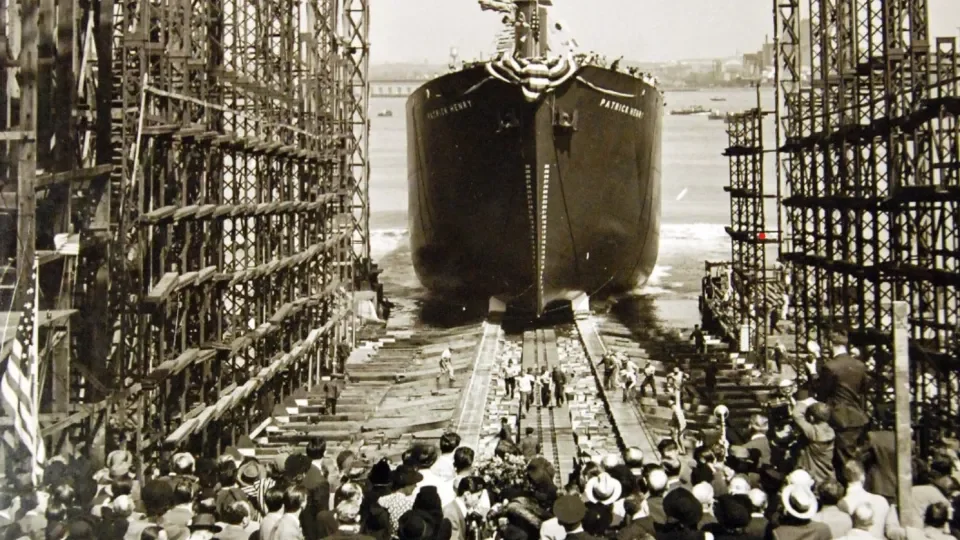
The SS Patrick Henry, the first U.S. Liberty ship, was launched at Baltimore, Maryland on September 27, 1941, known as “Liberty Fleet Day”
In January 1941, a retired Navy admiral named Emory Scott Land sat before a Congressional committee and made a promise that most people in the room thought was delusional. Land was chairman of the U.S. Maritime Commission, a Depression-era agency created to revive American shipbuilding. He told Congress he intended to build 200 vessels in the coming year, nearly double what American yards had ever produced, using a standardized design that professional naval architects had dismissed as a "floating boxcar."
The story we often hear about Liberty Ships centers on Henry Kaiser, a bold outsider disrupting a sclerotic industry through sheer force of will, delivering vessels at a pace the professionals called impossible. It is a satisfying American story, but it is incomplete, as it was Land who made the whole system possible. He didn’t build ships; he bought them.
A Wartime Intervention to Win the Atlantic
By the spring of 1942, the Allies were losing the war in the North Atlantic through a simple, devastating arithmetic: Britain ran on imported food, fuel, and material, and the German U-boats were winning by sinking cargo vessels and cutting off critical supply lines. Unless the rate of sinkings changed, Britain would be unable to meet its critical requirements in 1943. Winston Churchill later wrote that "the only thing that ever really frightened me during the war was the U-boat peril."
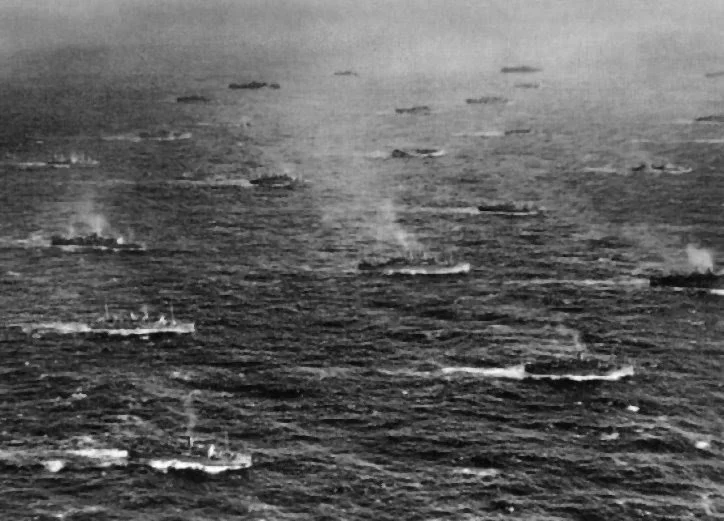
A Liberty Ship convoy in the North Atlantic. At the height of the U-boat campaign, the Allies were losing 600,000 tons of merchant shipping per month.
The solution, everyone agreed, was more ships; the question was how to produce them faster than they were being sunk.
The United States desperately needed cargo ships faster than conventional procurement, traditional shipyards, or skilled craft labor could deliver them. To solve this, Emory Land and the Maritime Commission created a guaranteed production program. In 1941, before a single ship was delivered at scale, the Commission committed to massive federal demand, giving American shipbuilders a simple, powerful signal: build the ships, and the government will take them. This commitment was the decisive demand move.
The Liberty Ship was not an exceptional vessel. It was slow and plain, with real technical flaws: cold-water brittle fractures caused dozens of catastrophic failures, including ships that split in half at anchor. When President Roosevelt reviewed the blueprints at the White House, even he couldn't quite hide his reservations. Musing aloud to Admiral Land, Roosevelt said, "I think this ship will do us very well. She'll carry a good load. She isn't much to look at, though, is she? A real ugly duckling."
Naval architects were not proud of the design; yet, its deliberate standardization was a decisive advantage. The design could be simplified, broken into repeatable parts, and produced at an enormous scale. Among the most consequential design choices in the Liberty ship was the shift from riveting to welding. As one shipbuilding analyst noted, "you can lay a line of solder much faster than someone can heat a rivet through." Welded hulls also required less skill, a third less labor, and saved on metal since plates were now butted instead of overlapped. Design standardization and workforce planning were not compromises; they were core components of the procurement strategy.
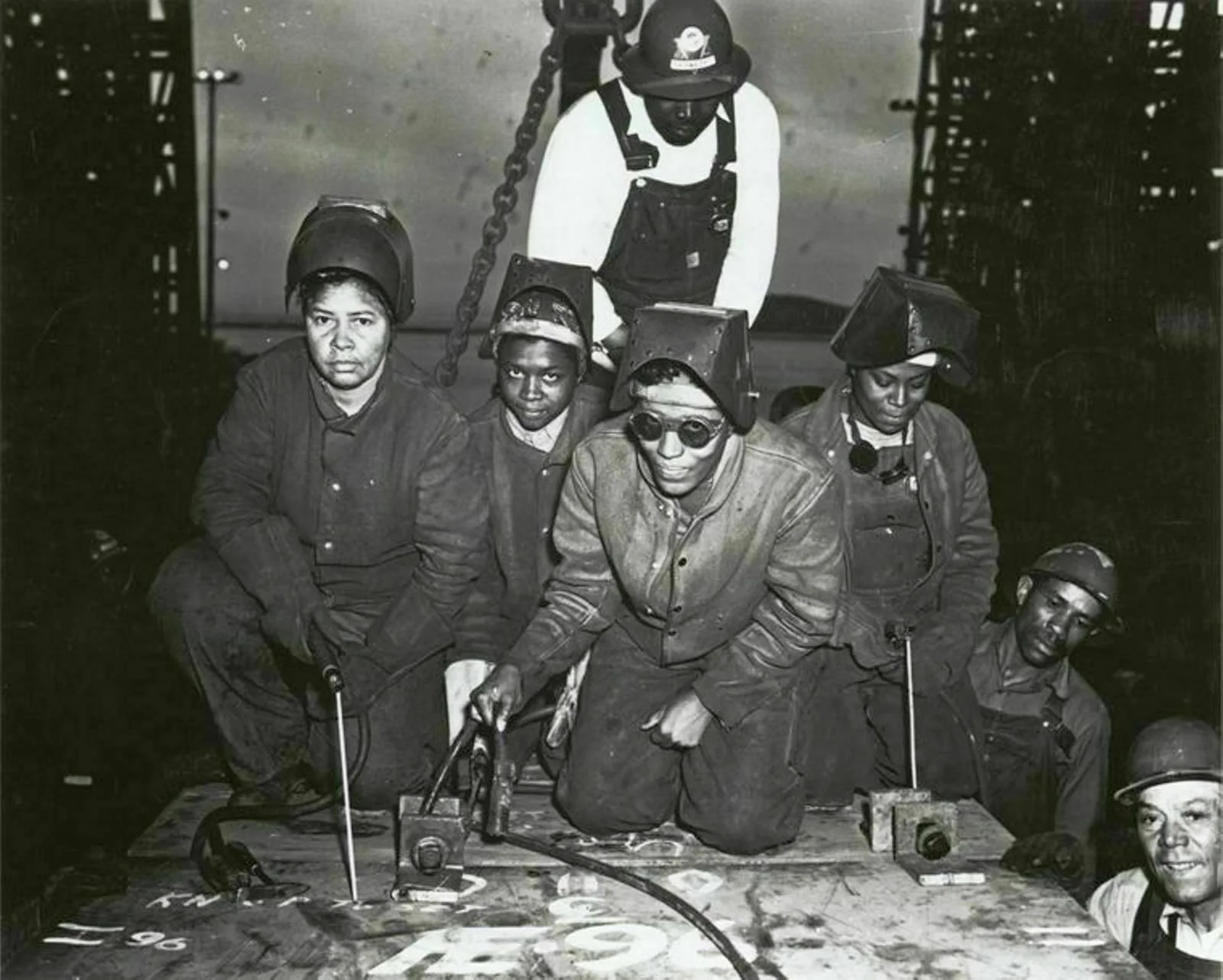
Workers at Kaiser's Richmond, California yard in 1943. The Liberty Ship design was engineered around a workforce that would arrive with no shipbuilding experience and needed to be productive within weeks.
Land and the Commission created the conditions where building a large number of adequate ships was strategically more valuable than a smaller number of excellent ones. Land understood this distinction and gave the name "Liberty Fleet Day" to the launch of the first fourteen vessels, with Roosevelt on hand for the christening of the SS Patrick Henry. In his speech, FDR cited the Revolutionary War patriot's immortal line: "give me liberty or give me death", and declared that this new class of ships would bring liberty to Europe. He was right, though not quite in the way the crowd understood. The ships would bring liberty not because they were great ships, but because there were so many of them.
Henry Kaiser’s breakthrough was downstream of Land’s demand commitment. Kaiser’s yards hired and trained inexperienced workers, reorganized work into sequenced tasks, and shifted toward prefabricated sections and parallel assembly. Once the government guaranteed the market, the production system could learn: workers got faster, suppliers standardized, and capital stayed utilized. The system improved because it had enough volume to learn.
The Maritime Commission's targets escalated in lockstep with the threat. Construction times that had taken 250 days for the first batch fell to 105 days, with ships going from keel-laying to launch in 60 days.
Even so, the frantic pace wasn't enough to satisfy Roosevelt. Kaiser’s Richmond yards famously launched the SS Robert E. Peary in less than five days as a publicity demonstration, but the more important achievement was not the stunt, it was the operating pace. In 1942, Roosevelt directed the Commission to build 8 million tons, and the goal was met. 16 million tons was the mark set for 1943, and more than 19 million tons were delivered. Liberty Ships moved from slow, project-based construction to repeatable industrial throughput.
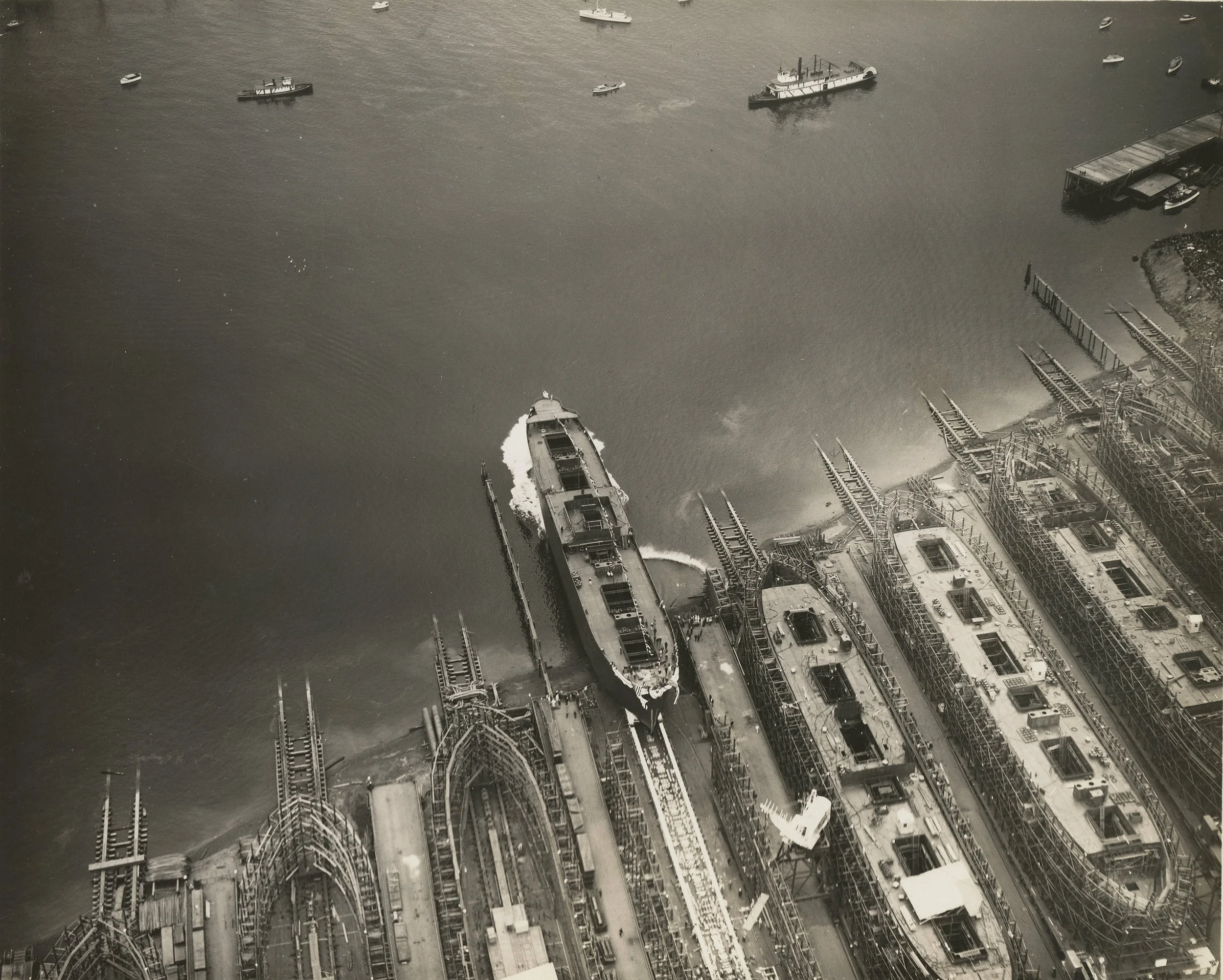
Aerial view of hull launching from Kaiser’s Oregon shipyard. c.1944.
Courtesy Oregon Hist. Soc. Research Lib.
Between 1941 and 1945, 2,710 Liberty Ships were built in 18 shipyards across the United States, accounting for over half of all U.S. merchant shipping constructed during the war.
A Liberty Ship was designed to cross the Atlantic, unload cargo, and do it again if it survived. Each ship meant more food, fuel, ammunition, vehicles, equipment, and troops moving into the war effort. At peak production, American yards were delivering ships faster than German U-boats could sink them, and that was the strategic break.
The Battle of the Atlantic was not won with better escorts, better radar, or better tactics alone; the United States industrialized its merchant shipbuilding until replacement capacity outran destruction. The Liberty Ship became a logistical weapon because the system behind it could deliver ships in adequate numbers at extraordinary volume and speed. Emory Land empowered that production system with a clear and urgent demand signal.
Land retired in 1946, and while his agency was dissolved, the impact of his strategy endured. Henry Kaiser’s subsequent innovations in optimizing the industrial system are significant and will be covered in a later case. Land’s decisive contribution remains this: he didn't build the ships; he brought the industrial system to life by buying them.
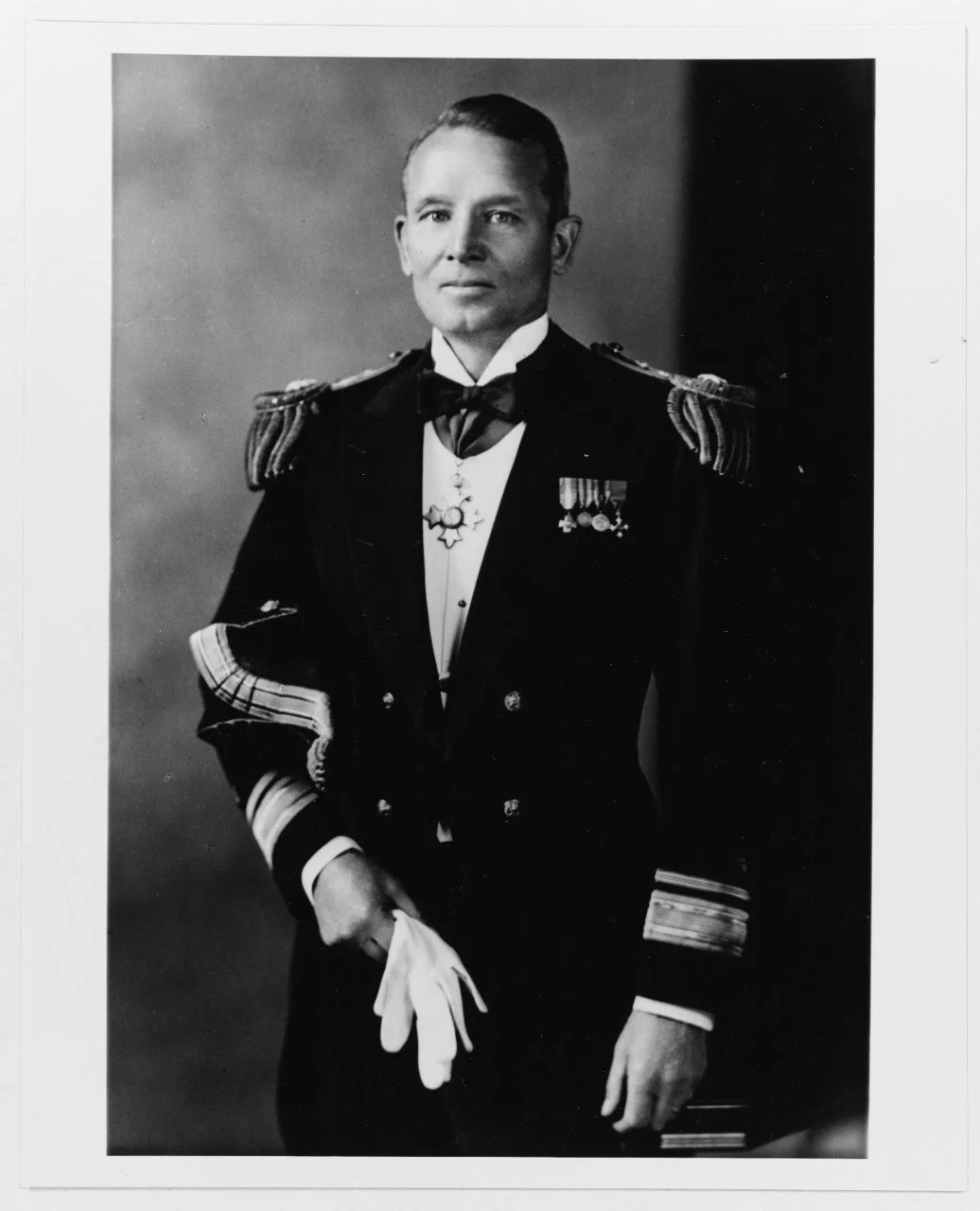
Admiral Emory Scott Land, Chairman of the U.S. Maritime Commission.
The Model
Land and the Maritime Commission established that a credible, unconditional purchase commitment is itself an industrial policy—a signal powerful enough to reorganize an industry.
Four core commitments define this procurement model:
Volume: Sufficient and consistent future demand to justify new capacity.
Repeatability: The same ship is built consistently across all yards, by all workers, and with all suppliers.
Consistent Throughput: A focus on improving the system's ability to produce ships, not customizing individual designs.
Industrialization begins when the buyer stops purchasing isolated items and starts buying a repeatable system. The lesson is not about simplicity; it is about the buyer deciding what must remain fixed long enough for the supply chain to learn.
A purchase commitment is an industrial policy
In other industries, such as construction, infrastructure, housing, and energy, buyers need to create the conditions under which suppliers can rationally invest to build faster, more cheaply, and better products.
The Limits
Land and the Maritime Commission, as a case study, has natural limits to learning and application, given the unique wartime considerations. There are three primary constraints to consider:
First, the Urgency Constraint: Wartime created an existential, non-negotiable urgency that modern infrastructure buyers rarely face. Delay and failure had immediate, visible costs.
Second, the Quality Constraint: Wartime necessity tolerated a basic, albeit structurally flawed ship. Modern buyers cannot use "adequate" as an excuse for low-quality or unsafe systems; they must clearly define the minimum acceptable product standard and hold it.
Finally, the Persistence Failure: The Maritime Commission's discipline did not outlive the crisis. After the war, many government procurement systems remembered the outputs (e.g., volume, speed) but forgot the upstream mechanism (e.g., concentrated demand, fixed specifications). Industrializing production without industrializing procurement can create a long-term mismatch.
Modern Application - Katerra
Katerra launched in 2015 with an explicit ambition to be the Liberty Ship moment for housing. It would standardize designs, shift production to factories, and eliminate the fragmentation that made American construction expensive and slow. It raised over $2 billion and grew to 7,500 employees before collapsing in 2021. The biggest issue Katerra never seemed to solve, according to observers, was convincing developers and contractors to move away from their traditional subcontractors. Developers have "very sticky relationships with their own engineers, own suppliers, and their own construction relationships." Every project was a negotiation. Every site had different permitting requirements. Every developer had their own specifications. The demand signal was never sufficient to justify the level of process investment required for Liberty Ship-scale production.
Where to Start
The Liberty Ships argument reduces to one question:
What are you willing to commit to before you seek process optimization?
Most buyers wait for lower costs and proven suppliers before they commit. Industrialization often requires the opposite: a commitment must come first; learning follows.
As a buyer, commitment means standing behind your vision and moving from vague interest to concrete action. A buyer can create a commitment in many industries and many different ways, including:
A Developer Pipeline: Commit to one structural system across a five-project pipeline before the first RFP.
A Public Agency: Issue a multi-year framework agreement around standard unit types, fixed dimensions, and performance parameters.
A Corporate Real Estate Developer: Standardize fit-out specifications across a regional portfolio and hold that spec for three years.
Other Sector-Specific Construction: Utilities, housing authorities, hospitals, and universities can standardize repeatable elements, such as components, room types, and unit layouts, across their portfolios.
The starting point is the buyer's own procurement discipline. The key questions for any buyer are:
What are we willing to repeat and hold stable enough for suppliers to engage?
Where do we have enough future volume to make a difference?
Which specifications are truly necessary, and which are just inherited preferences?
What exceptions will we refuse?
The product needs to satisfy a current need, be bought in volume, and be purchased in stable quantities long enough for the system to learn and industrialize.
Ultimately, Land's lessons are simple:
Do not ask the supply chain to industrialize around uncertainty.
Create the demand signal first and empower the system to improve.
References:
Churchill, Winston S. The Second World War, Vol. 2: Their Finest Hour. Cassell, 1949, pp. 528–29.
Bell, Christopher M. "Longest Campaign: Winston Churchill and the Atlantic Battle, 1940–43." Hillsdale College Churchill Project, 2021. https://winstonchurchill.hillsdale.edu/bell-atlantic-battle/
NavalGazing. "Liberty Ships, Part 2." Naval Gazing (blog). https://www.navalgazing.net/Liberty-Ships-Part-2
Land, Emory S. (Vice Admiral, USN Ret., Chairman, U.S. Maritime Commission). Speech transcript. Reproduced in "Quotes about the American Merchant Marine from Presidents, Military and National Leaders." U.S. Merchant Marine. http://usmm.org/quotes.html
National Park Service. "Liberty Ships and Victory Ships, America's Lifeline in War." Teaching with Historic Places lesson plan. U.S. Department of the Interior. https://www.nps.gov/articles/liberty-ships-and-victory-ships-america-s-lifeline-in-war-teaching-with-historic-places.htm
MarineLink / Maritime Activity Reports. "Ugly Ducklings & Steaming the Way to Victory in WWII." January 28, 2014. https://www.marinelink.com/news/ducklings-steaming363512
History Tools. "The Liberty Ships: Unsung Heroes of World War II." https://www.historytools.org/stories/the-liberty-ships-unsung-heroes-of-world-war-ii
de Valence, Gerard. "Industrialized Building and the Failure of Katerra." August 2021. https://gerard-de-valence.blogspot.com/2021/08/industrialized-building-and-failure-of.html
Construction Dive. "What Does Katerra's Demise Mean for the Contech and Modular Industries?" October 13, 2021. https://www.constructiondive.com/news/what-does-katerras-demise-mean-for-the-contech-and-modular-industries/608037/